Long before you take your first sip of coffee, before the beans have been roasted and blended to perfection, they have been through a rigorous process of checking and grading to make sure that the right coffee beans are used appropriately.
How are coffee beans graded?
From South America to Africa, there are different grading systems for evaluating the quality of coffee beans. Experts look at the bean size, number of defects, moisture content and cup quality.
The Specialty Coffee Association grading system (GACCS) is widely used to assess Arabica coffee beans, but many countries have their own methods. Most grading processes involve:
- a visual inspection – beans are checked for defects like black beans, broken or mouldy beans
- size screening – beans are separated by size
- cupping – the coffee is smelled and tasted to evaluate flavour, aroma and acidity
How do defects influence coffee quality?
Insect damage is common in coffee beans and they can get broken and chipped during processing. A black bean amongst the green beans has been deprived of water or over-fermented at the farm. The fewer the defects, the higher the grade and the better the quality of coffee.
What do the different grades mean?
In the SCA grading (GACCS) system, coffee beans are given a grade 1-5 score so that buyers can expect a consistent quality.
- Grade 1 specialty – the highest quality beans used by specialty coffee roasters and cafes. Peaberry & Leaf coffee is always Grade 1
- Grade 2 premium – high quality beans used by commercial coffee roasters
- Grade 3 exchange – medium quality beans that are mostly traded on commodity exchanges for use in supermarket coffee
- Grade 4 standard coffee beans – low quality beans that are used in instant coffee and blends
- Grade 5 off-grade – the lowest quality beans used for coffee flavourings and non-food purposes
Why is coffee grading important?
There are significant differences between coffee beans – from region to region and even farm to farm – not all coffee is created equal. Naturally, it’s important that the best beans are used for premium products and so on down the line. When you pay for a specialty coffee you want to taste the nuances of flavour and complexities of aroma and body.
Specialty coffee vs commercial grade coffee
The beans used for specialty coffee are grown in the best conditions – at high altitude in fertile soil, picked by hand and graded as high quality. Specialty coffee is typically roasted in small batches to bring out the unique flavours of the beans.
Whereas commercial coffee is typically made from lower grade beans that are grown in greater quantities, are machine-harvested and roasted in large batches to a darker level which results in a less complex flavour profile.
Peaberry & Leaf Coffee
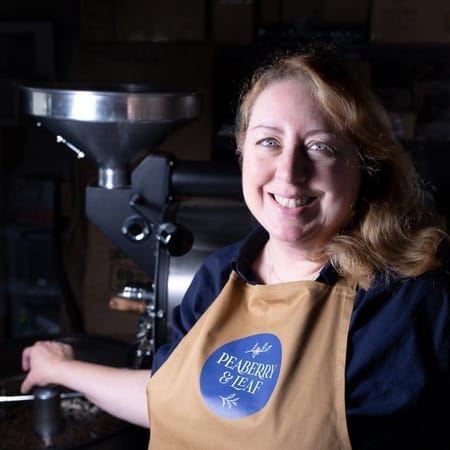
All of the coffee sold by Peaberry & Leaf is specialty grade Arabica, traceable back to the farm, co-operative or region or community where it was produced. We only buy our coffee from reputable suppliers to ensure its quality and traceability. We use experienced coffee roasters who take great care in getting the roast level just right, so you enjoy all the complexity of flavours only the highest grade speciality coffee can offer.